

How to Choose Outdoor Lighting for Entrances, Gardens and Paths
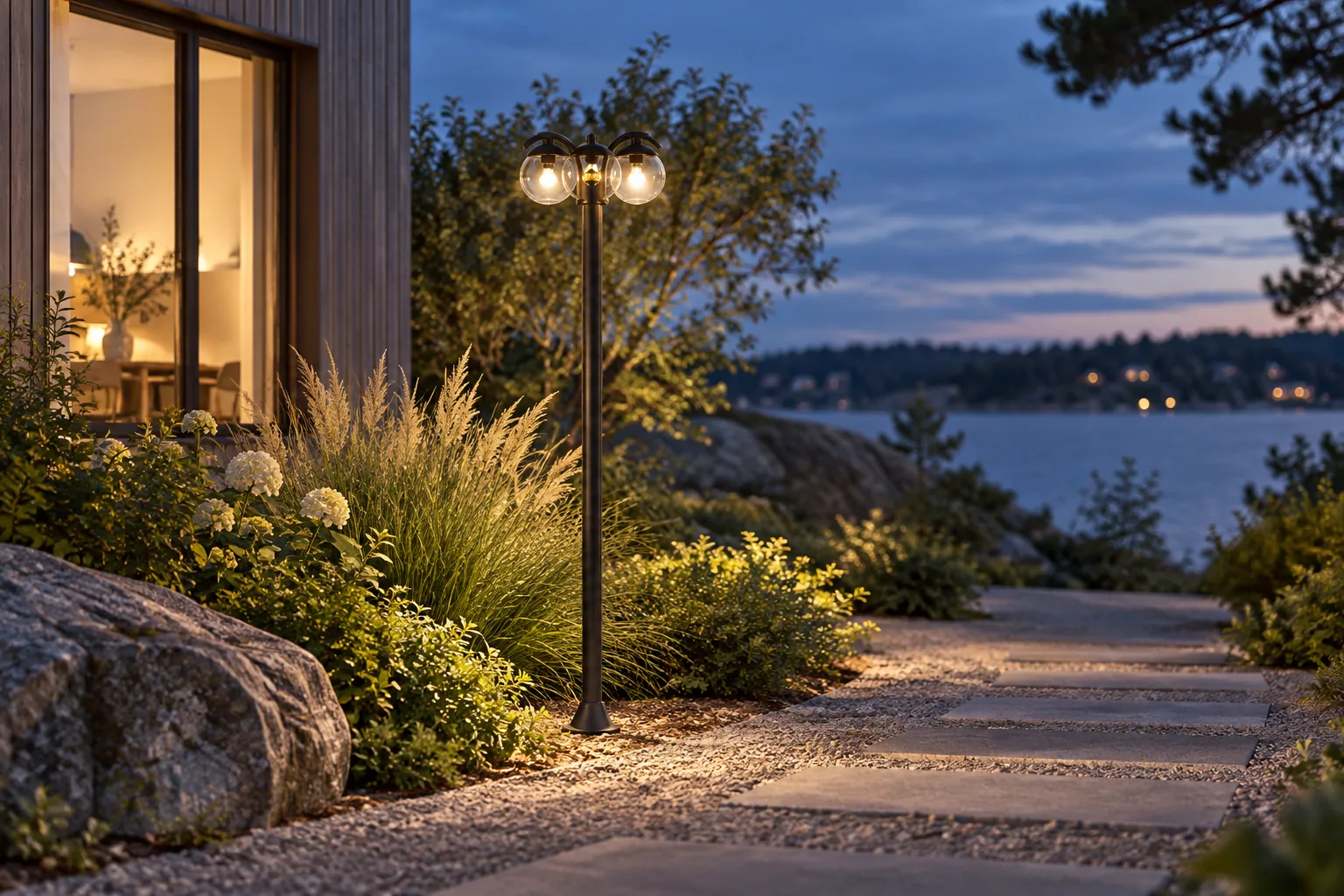
An entrance needs light where a visitor approaches the door. A garden route needs an understandable edge. A terrace needs comfortable light at seated eye level. Choosing an outdoor fitting starts with those tasks, then moves to the model, light source and installation conditions. Mark the door, changes in level, planting and property boundary on a simple plan. Note where people will look towards a fitting and whether nearby windows face it. Then record the mounting surface, available cable route and likely exposure to rain or irrigation. These details narrow the choice more effectively than selecting a shape first. A wall fitting can use the building as its mounting surface. A freestanding garden fitting needs a suitable base and a planned electrical connection. Solar products introduce a separate question: will the panel receive enough unobstructed daylight? An attractive location for the lamp is not automatically a suitable charging location. HR60101 is an entrance or terrace wall-light example: E27 lamp holder, maximum lamp wattage 15 W, aluminium housing, PC diffuser, IP54 and dimensions of 120 × 90 × 250 mm. HR60861 is an architectural façade-light example: IP65, aluminium housing, clear PC diffusers, LED 2 × 3 W or G9 max. 5 W versions and dimensions of 200 × 100 × 100 mm. HR60694 is a freestanding decorative garden example: E27 lamp holder, glass diffusers, IP54 and listed overall dimensions of 605 × 200 × 2500 mm. These are different starting points, rather than interchangeable solutions. The height of HR60694 affects how it sits within a garden and how its sources are seen. HR60861 produces an up-and-down architectural effect. HR60101 has a visible lamp behind a clear diffuser, so the selected bulb strongly affects both appearance and comfort. Watts describe electrical power, while lumens describe total light output. Neither value alone tells you how much light reaches a step or how bright a source looks from a chair. Beam direction, mounting height and surface reflectance also matter. Use a sample or a lighting calculation where coverage is important. For HR60101, 15 W is the fitting's maximum lamp rating, not a requirement to fit a 15 W bulb. For HR60861, the catalogue's 420 lm refers to the LED version; it should not be transferred to a G9 lamp selected separately. Keep the light-source version written beside every quoted wattage or lumen value. Compare colour appearance on the actual wall and planting. Where the chosen version permits it, a warm source can suit a residential entrance or seating area. Confirm the available colour temperature, dimming compatibility and control method for that exact version. A 3CCT option does not, by itself, mean app control or dimming. Provide the model, quantity, destination market, mounting position, power supply, exposure and preferred finish. Add the intended operating hours and any control requirements. For a project that needs defined light levels, include the plan and request the relevant photometric data. This gives HORLITE a clear basis for confirming the fitting and its configuration before supply. Product references: the linked HORLITE product pages and catalogue specifications, checked 14 October 2026. Final configuration and installation details should match the approved quotation and technical documents.Start with the location and the power supply

Compare real models by the job they need to do

Separate electrical power from useful light
Choose colour and controls as part of the specification
Send a brief that can be quoted accurately
