
Technology & Quality
Inside the Assembly Process: Building Consistency into Outdoor Lighting
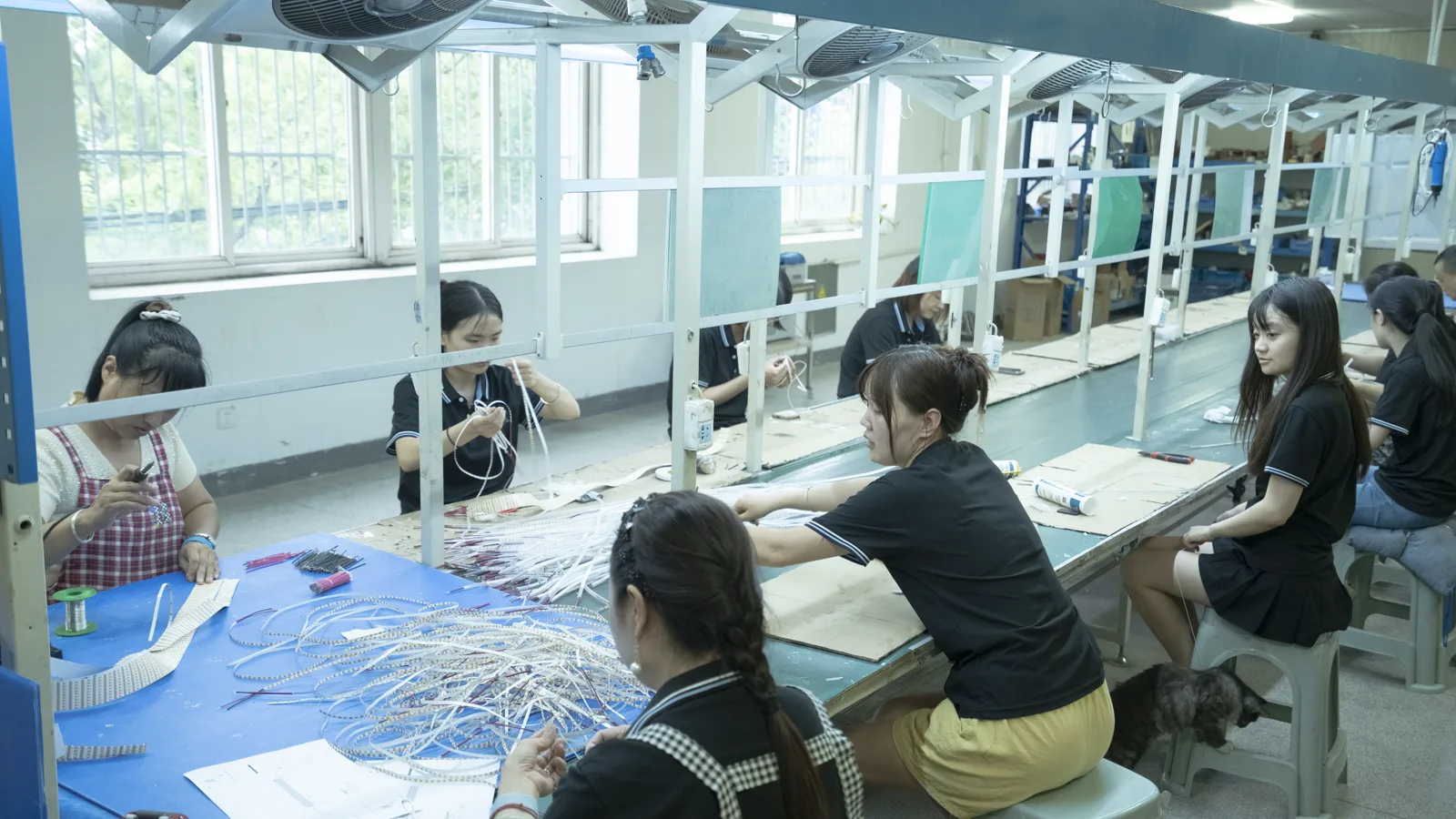
Product consistency is built through many small, controlled actions. In outdoor lighting assembly, component preparation, wiring, fastening and visual checks must work together. A well-organised workstation helps operators complete those steps in a clear and repeatable order.
Preparation makes the assembly step clearer
Before a light is assembled, the required components need to be identified and prepared. The factory photographs show light-source strips, wires and small parts arranged at dedicated workstations. Keeping parts visible and within reach helps the operator focus on the task and reduces avoidable handling.
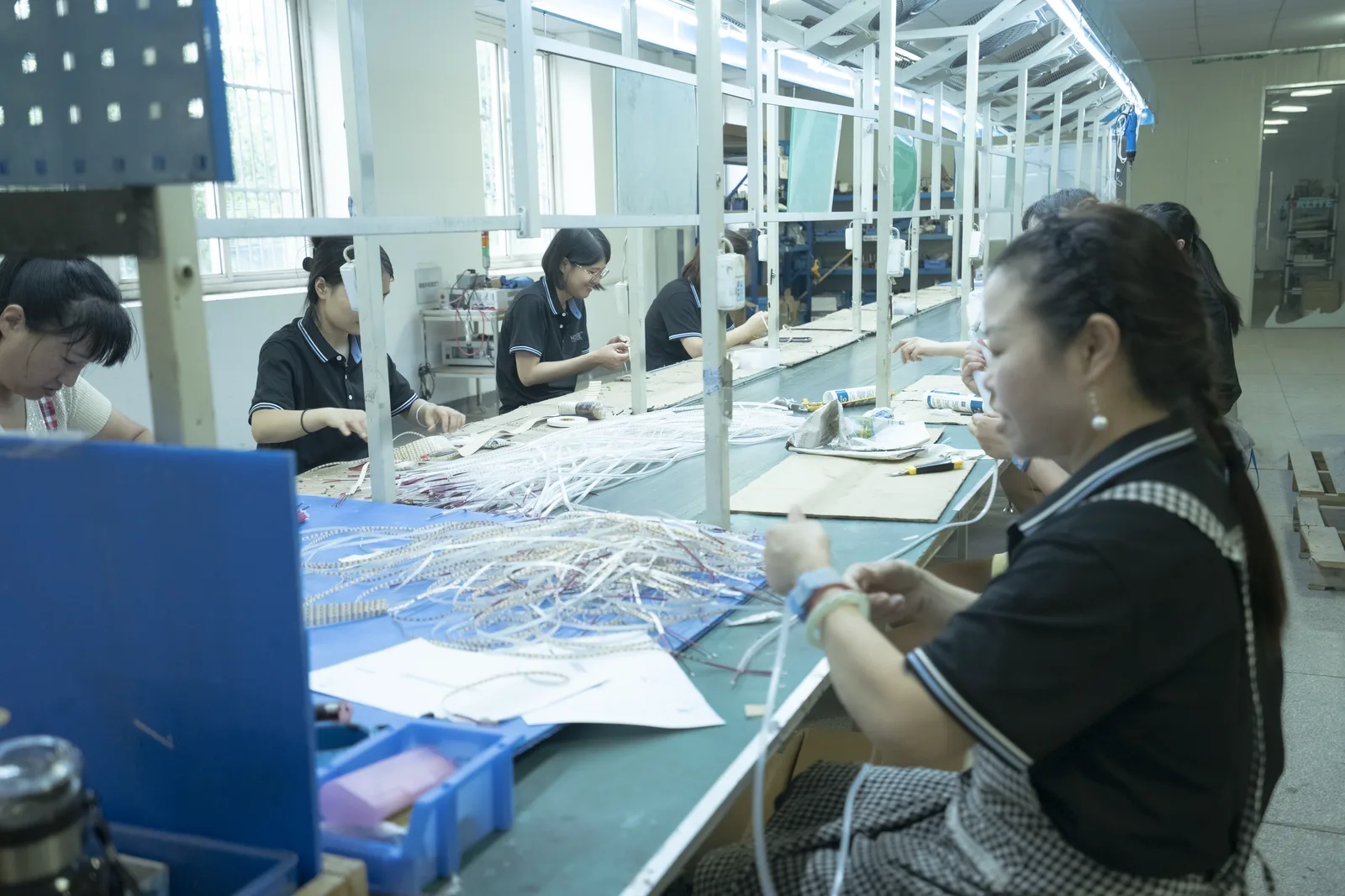
Preparation is especially important when several product variants are in production. Similar housings may use different light sources, cable arrangements, finishes or accessories. Clear separation and identification help the line follow the specification intended for each order.
Repeatable sequences support reliable results
An assembled outdoor light contains multiple interfaces: the housing meets the diffuser, wiring connects to the light source and fastening points hold the structure together. The order in which these parts are fitted affects both working efficiency and the opportunity to observe mistakes.
A repeatable sequence gives each operator a common reference. It also makes in-process review more practical because the same checkpoints appear at the same stage. This does not remove the need for judgement; it gives skilled operators a more consistent framework in which to use it.
In-process observation catches issues earlier
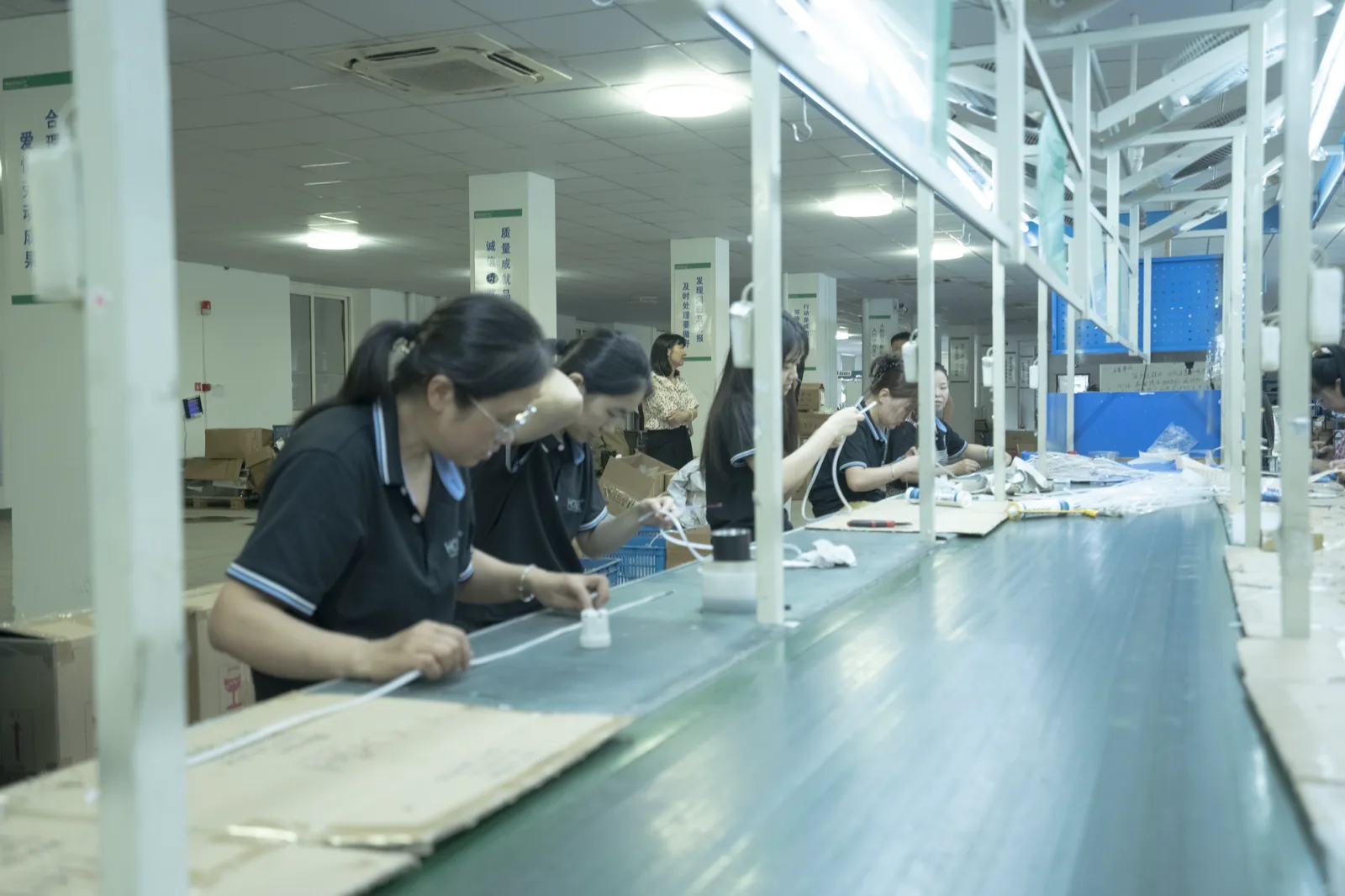
Waiting until the end of production to look for every issue is inefficient. During assembly, operators can observe whether parts fit correctly, whether wiring is positioned as intended and whether fasteners or visible surfaces require attention. When something looks unusual, it can be separated for review before moving forward.
For project orders, this also creates useful feedback. If a particular design detail repeatedly makes assembly difficult, the engineering and production teams can discuss whether a practical adjustment is needed for future production.
People remain central to the process
Equipment and work instructions are important, but outdoor lighting assembly still depends on people. The factory images show teams working across multiple stations, concentrating on detailed manual tasks. Familiarity with the product helps operators recognise when a component does not feel or appear as expected.
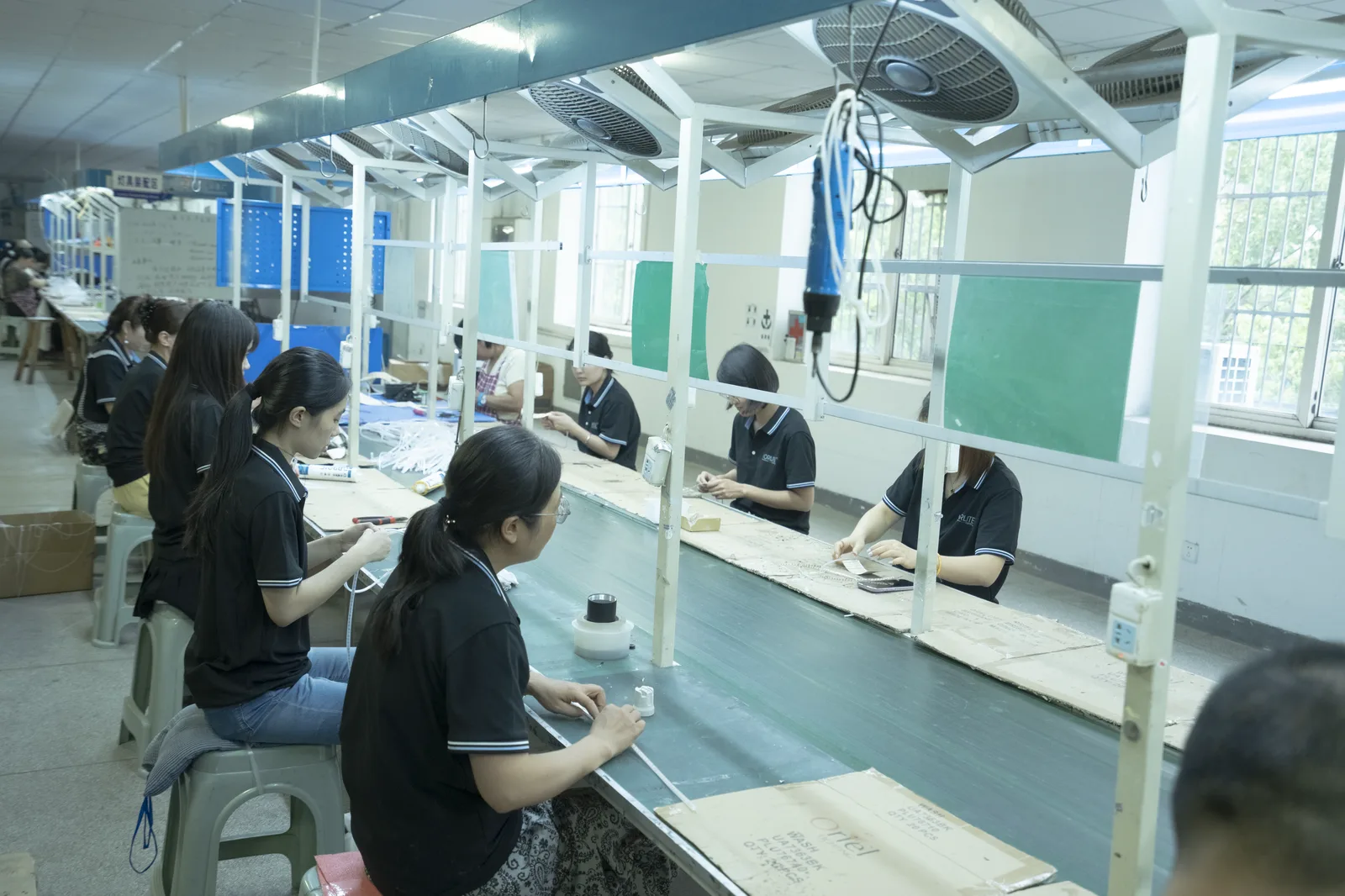
Training, communication and a tidy work area all contribute to this human side of consistency. They make it easier to follow the intended process and to raise questions when a specification needs clarification.
From assembled unit to the next quality step
Assembly is not the finish line. Completed units move on to the checks appropriate to the product and project. These may include appearance review, functional confirmation and selected electrical or optical measurements. Packaging should begin only after the product has completed the required internal steps.
For buyers, understanding the assembly process is useful because it reveals how a factory approaches repeatability鈥攏ot only how the final sample looks. If you are evaluating an outdoor lighting supplier, ask how components are prepared, how assembly steps are controlled and how production observations are communicated. HORLITE welcomes those practical project discussions.
